
Jouets éducatifs au Maroc : puzzles, VTech

Voir la descriptionMasquer la description
Educational Toys, Puzzles and Montessori: Learning Through Play
A child does not learn because a toy tells them they are going to learn. They learn because they handle things, make mistakes, try again and eventually understand. The games in this collection all share the idea of giving children room to do this rather than doing the work for them.
What the Montessori Approach Involves
Maria Montessori observed that children concentrate for long periods when materials are within their reach, isolate one difficulty at a time and allow them to recognize their own mistakes. A shape-sorting toy where a piece only fits into the right hole is the simplest example: the child does not need anyone to know that they have made a mistake.
- Natural materials, particularly wood, for a rich sensory experience
- One difficulty at a time, without an overload of colors or sounds
- Error control built into the material
- Few toys available at the same time, to encourage concentration
By Age Group
From 6 to 18 months
Simple shape sorters, first knob puzzles and stackable toys. The child develops their grasp and learns the relationship between an object and its place.
From 18 months to 3 years
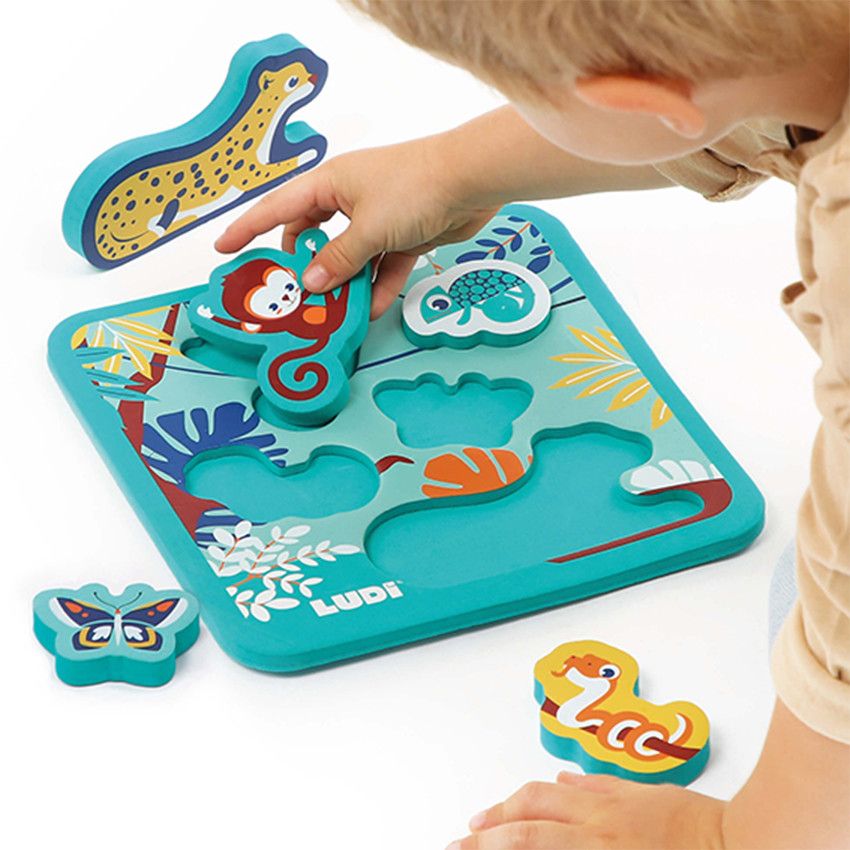
4- to 12-piece puzzles, color- and size-sorting games and first bead-threading activities. Fine motor skills become more precise while vocabulary develops at the same time.
From 3 to 6 years
20- to 60-piece puzzles, construction games and first logic and rule-based games. This is the age when frustration becomes productive: the child perseveres.
From 6 years and up
Brain teasers, strategy games and complex construction sets. Katamino and Quercetti are well suited to this age group.
Our Brands
Hape works with wood using safe finishes and paints, with product ranges covering every stage of early development. Nathan offers educational games designed by educators, in French. Quercetti, an Italian brand, is a leading name in construction and fine motor skills games. Eurekakids and Ludi complete the selection.
Choosing the Right Toy
A toy that is too advanced is discouraging, while one that is too simple is boring. The age shown on the box is a guide, not a rule: instead, observe where your child is developmentally. If they succeed on the first try, move on to the next step. If they consistently give up, go back a step without making an issue of it.
Always follow the minimum age recommendations related to safety, especially warnings about small parts for children under three.
Create Your Child's Selection
Browse the collection by age or by type of game. Delivery throughout Morocco, with pickup available in Kénitra.
Frequently Asked Questions
Do I need to buy official Montessori materials?
No. No official label exists. What matters is that the game isolates one difficulty and allows the child to check the result independently.
How many toys should I leave available?
Few. A limited selection, regularly refreshed through rotation, encourages concentration far more effectively than an overflowing toy chest.
Are wooden toys safer?
Not automatically. Check the standards and paints used. Wood lasts longer and offers a richer sensory experience, but certified plastic toys are perfectly safe.
At what age should children start doing puzzles?
Around 18 months with knob puzzles, then around 2 years with real puzzles consisting of a few pieces.








Excellent choix des produits pour les enfants sur tous les niveaux.
Fidèle au magasin
J’aurais bien voulu qu’on me dise qu’il y’avait une offre sur les écrans solaires car date de péremption proche ☹️
Coussin d'allaitement reçu endommagé et visiblement rafistolé.
En retirant la housse, j'ai découvert une couture ouverte avec un trou par lequel les microbilles s'échappent. Les coutures ne sont pas identiques des deux côtés, celle du côté abîmé semble avoir été refaite à la main.
Le coussin manquait aussi de volume. Ce n'est pas mon premier coussin d'allaitement, j'ai un point de comparaison.
Tout indique un article déjà endommagé, recousu puis expédié comme neuf.
J'ai envoyé un mail avec photos à l'appui, puis relancé par WhatsApp. Service client inexistant.
Très déçue
Je tiens à remercier BebyBoss pour la qualité de ses produits et son excellent service. 🌷
Des articles de qualité, un très bon accueil et un professionnalisme remarquable.
Merci pour votre sérieux et votre confiance ! ❤️
Products are good. But they need to work on their delivery service. Delivery must be done on business hours. Not late at night
Service client catastrophique. Délais annoncé 1j, livré 5jours après. Demande d’échange, accepté puis refusé alors que le produit n’a même pas été ouvert!! Je ne recommande pas du tout de passer pr eux pour une livraison
Un article ne contenait pas l’emballage et l’étiquette qui prouve qu’il est neuve et portait une odeur qui laisse croire qu’il a été utilisé le pire quand j’ai réclamé par mail et par watsup je n’ai eu aucune réponse
Livraison rapide tout est arrivé en parfait état vu le bon emballage
J’ai beaucoup aimé la qualité du produit, son joli design et le sérieux de la boutique. Ma lunch box est très belle, pratique et conforme à mes attentes. Je suis très satisfaite de mon achat
Très bonne qualité et service de livraison rapide. Je vous remercie et à la prochaine inchaalah.
Après mon achat, j'ai constaté que votre site est le plus cher
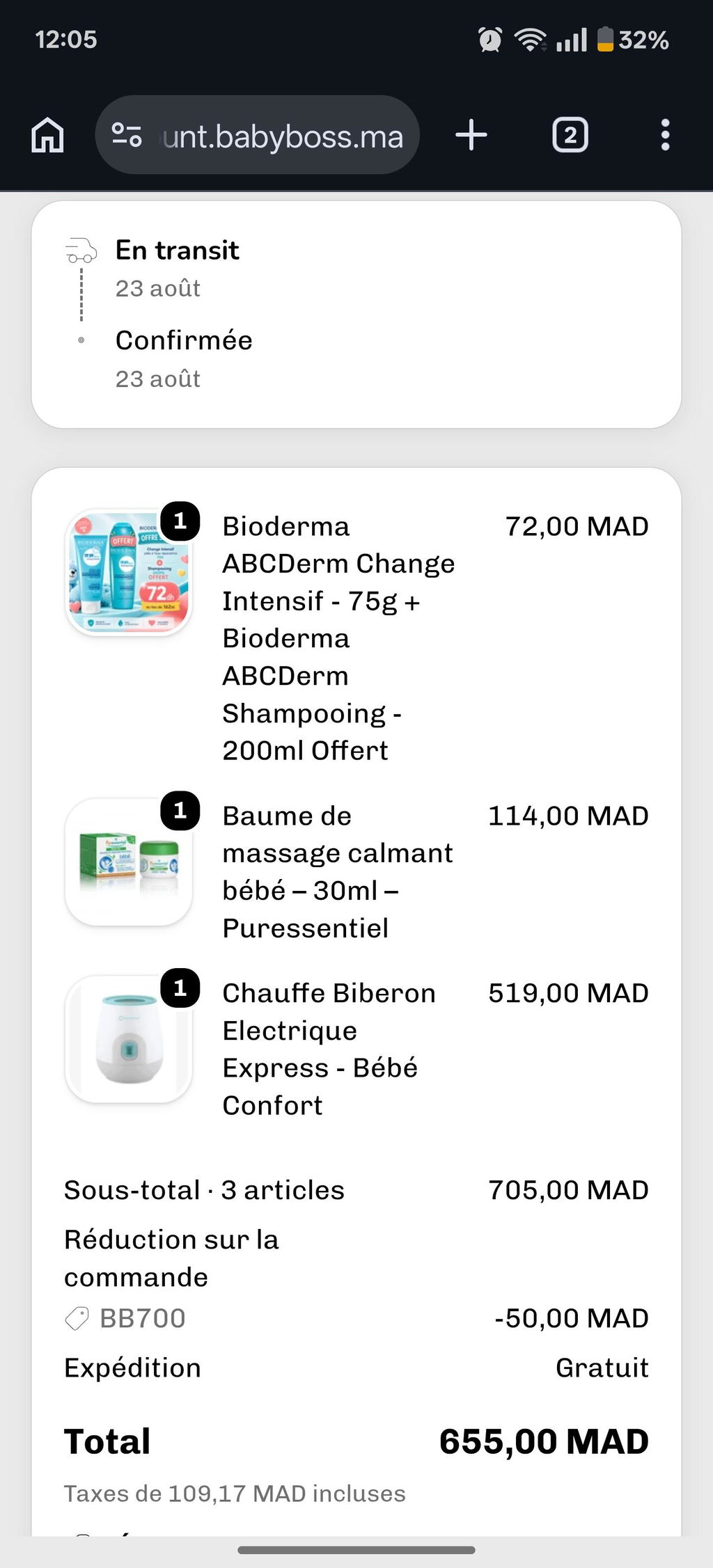
pour ma 1ère commande, votre assistante ma appelé pour dire l'un des articles n'est plus en stock, alors que la commande est validé, en transit. pas de crédibilité dès la 1ère commande qui sera malheureusement la dernière pour moi
Très satisfaite
Pour ma 1ère commande, on m'appelle pour dire l'un des articles n'est plus en stock, alors que sur le site ma commande et bien confirmée, en transit!!
Service zwin bzaf olmo3amala ghzala o deghya la commande katwsel okoulchi ghzala kif ma f les photos merci bcp omaghadich tkoun akhir mo3amala dima incha2lah